Location lock
Three routes and the visual direction are agreed before production begins.
A new route to LED volume content
Real-world locations transformed into controlled, camera-ready driving plates—without a location shoot or a virtual world build.
The proposition
Driving scenes need a believable world beyond the windows. Traditionally, that means a camera rig on location or a detailed 3D environment.
This workflow begins with a real road, then uses generative tools to create movement from each camera direction. The result is a coordinated set of plates designed for an LED volume.
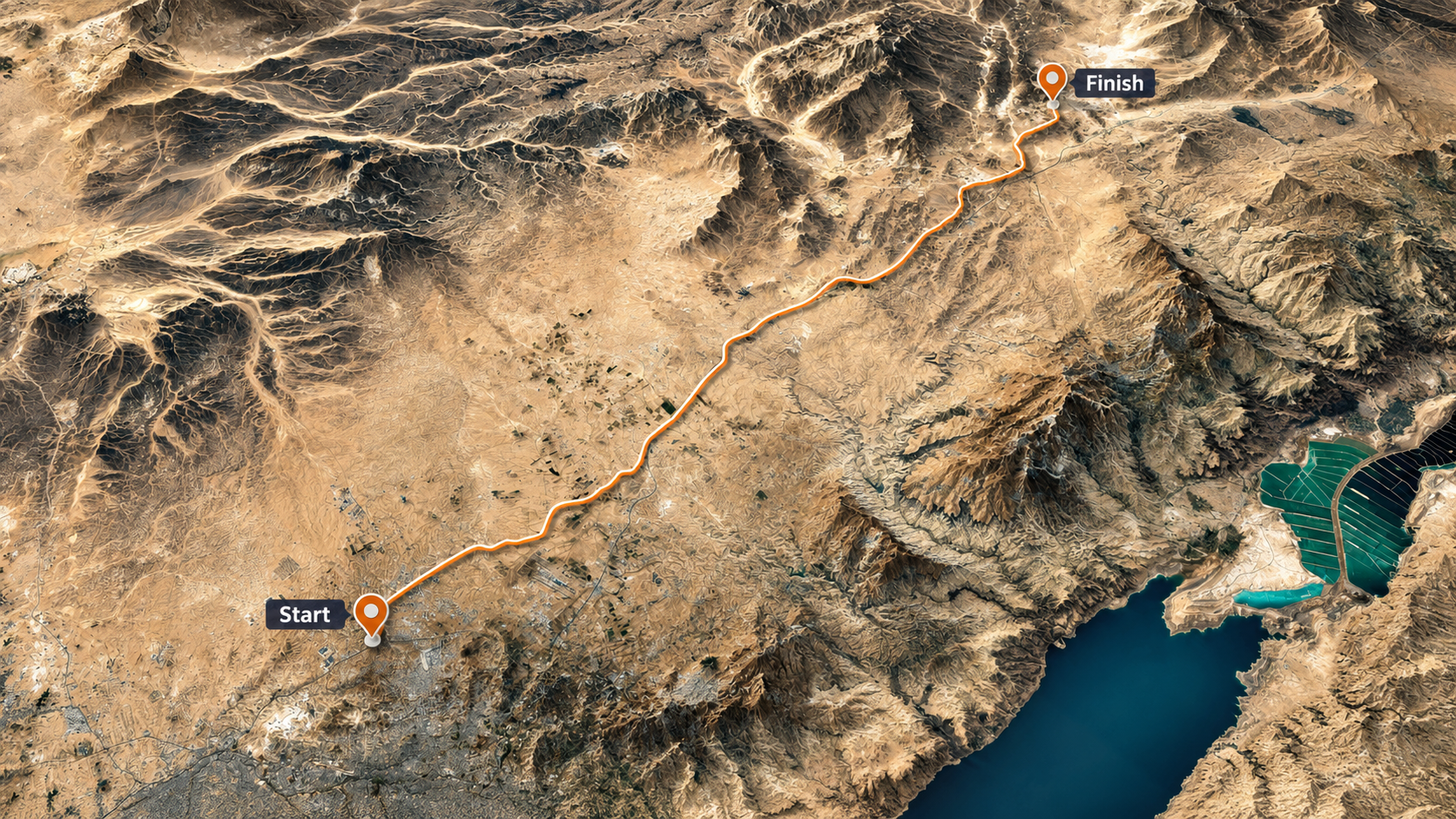
Select the world
We begin by choosing three real-world roads. A route might cross a Jordanian desert, follow a reservoir in Granada, wind through the British countryside or enter central London.
The chosen road becomes our visual reference: its terrain, architecture, surface detail and sense of place.
Build the coverage
At each location, high-resolution source views are selected for eight directions around the vehicle—matching the coverage of a real 360° camera rig.
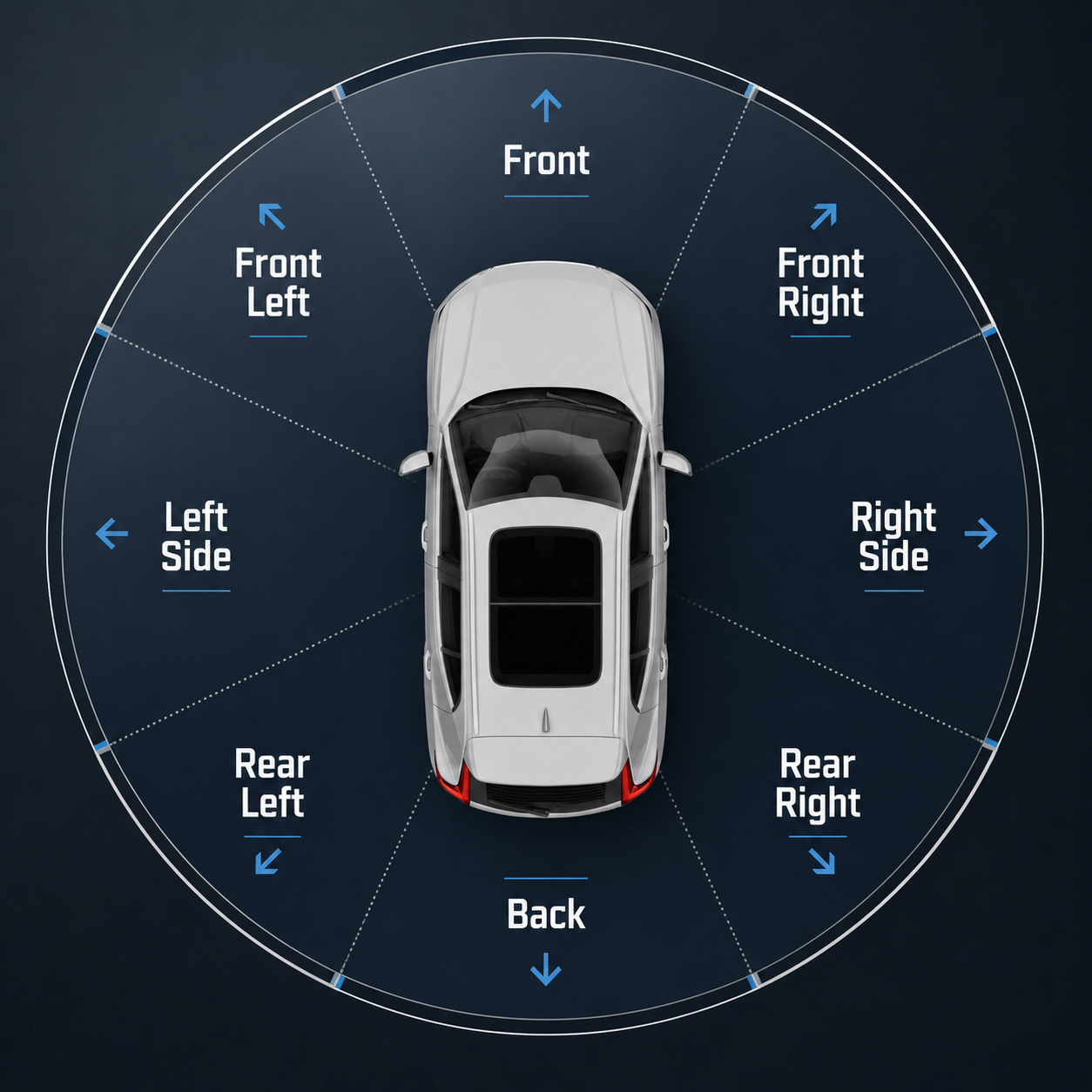
Prepare the image
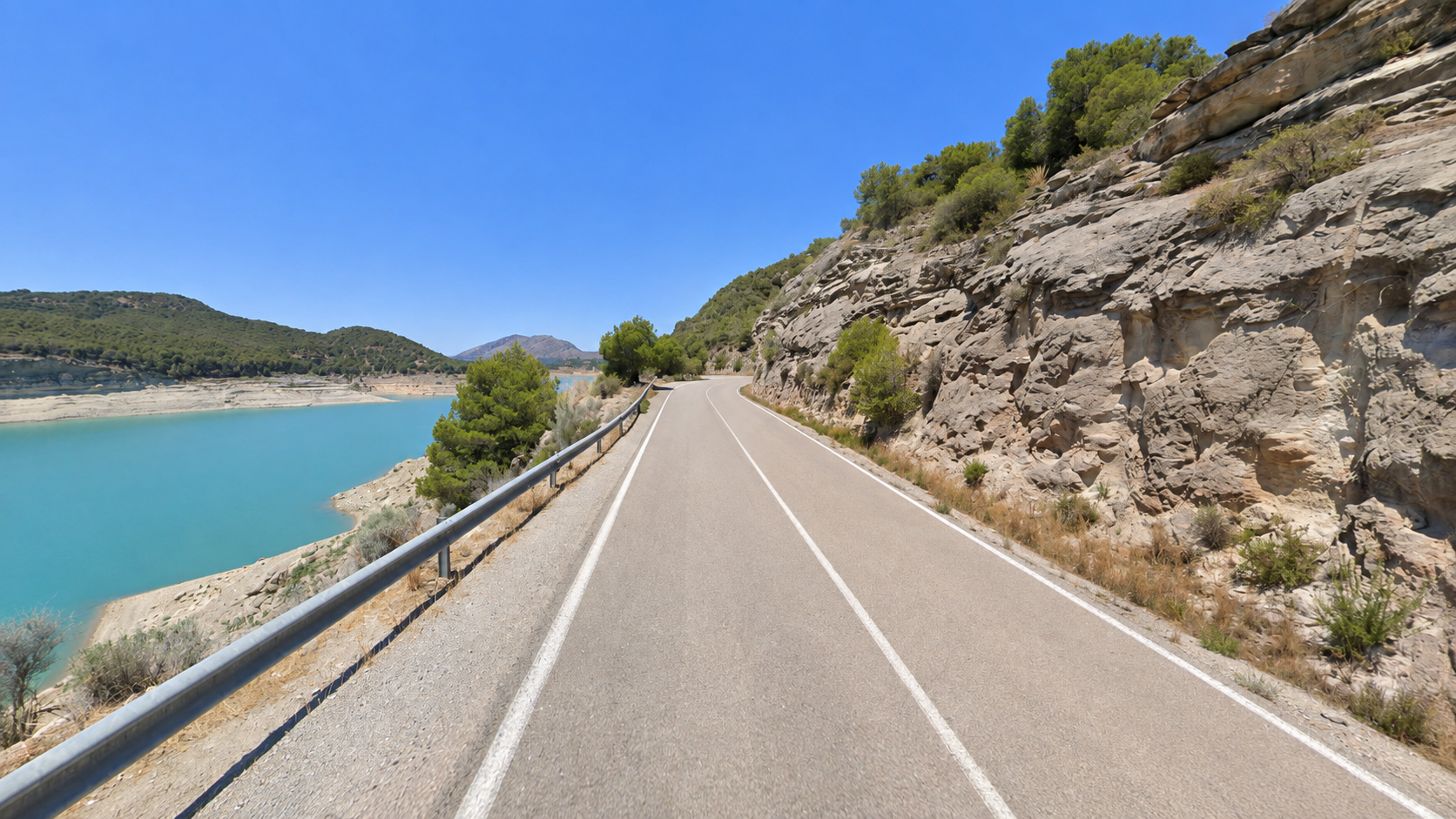
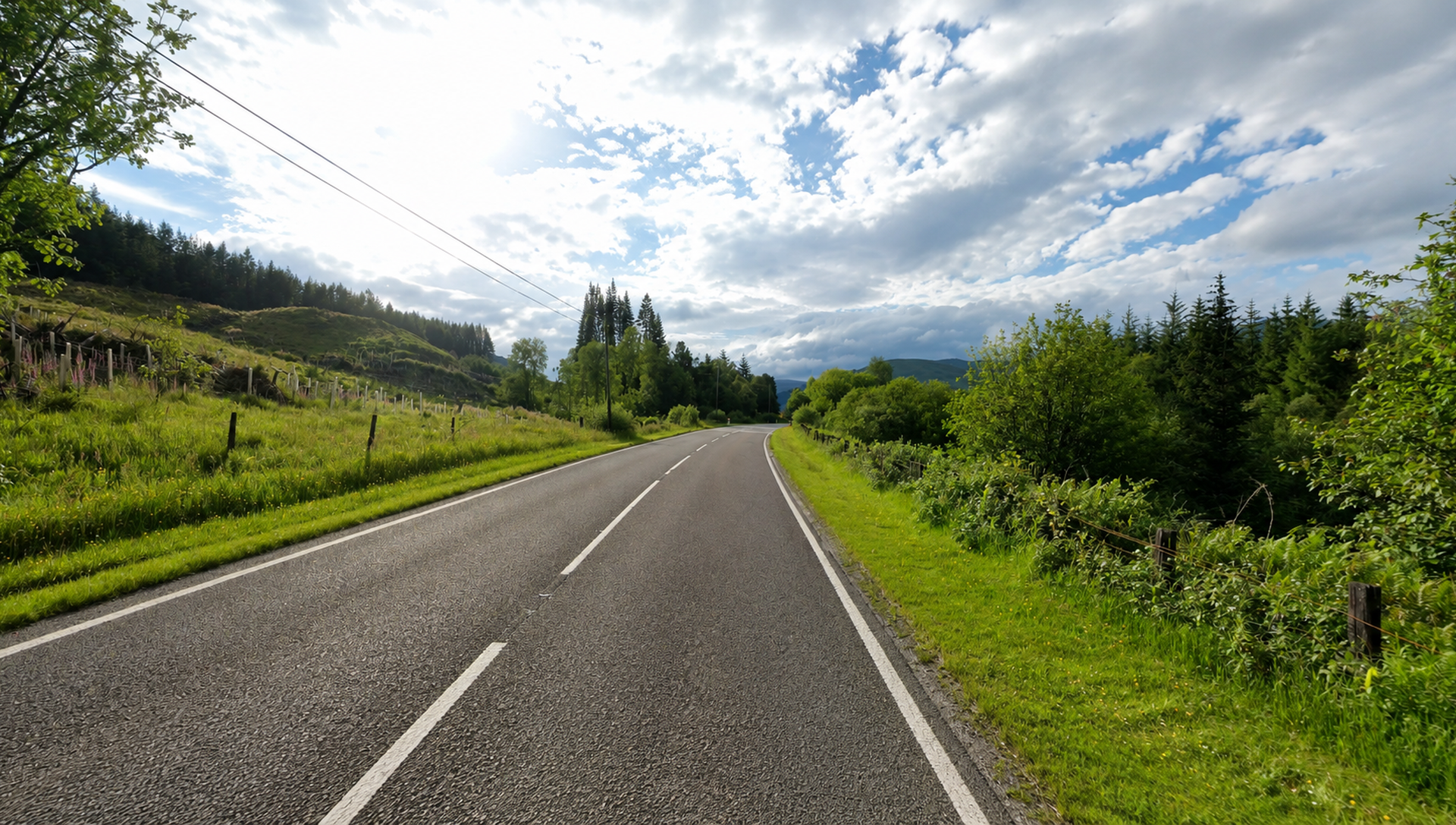
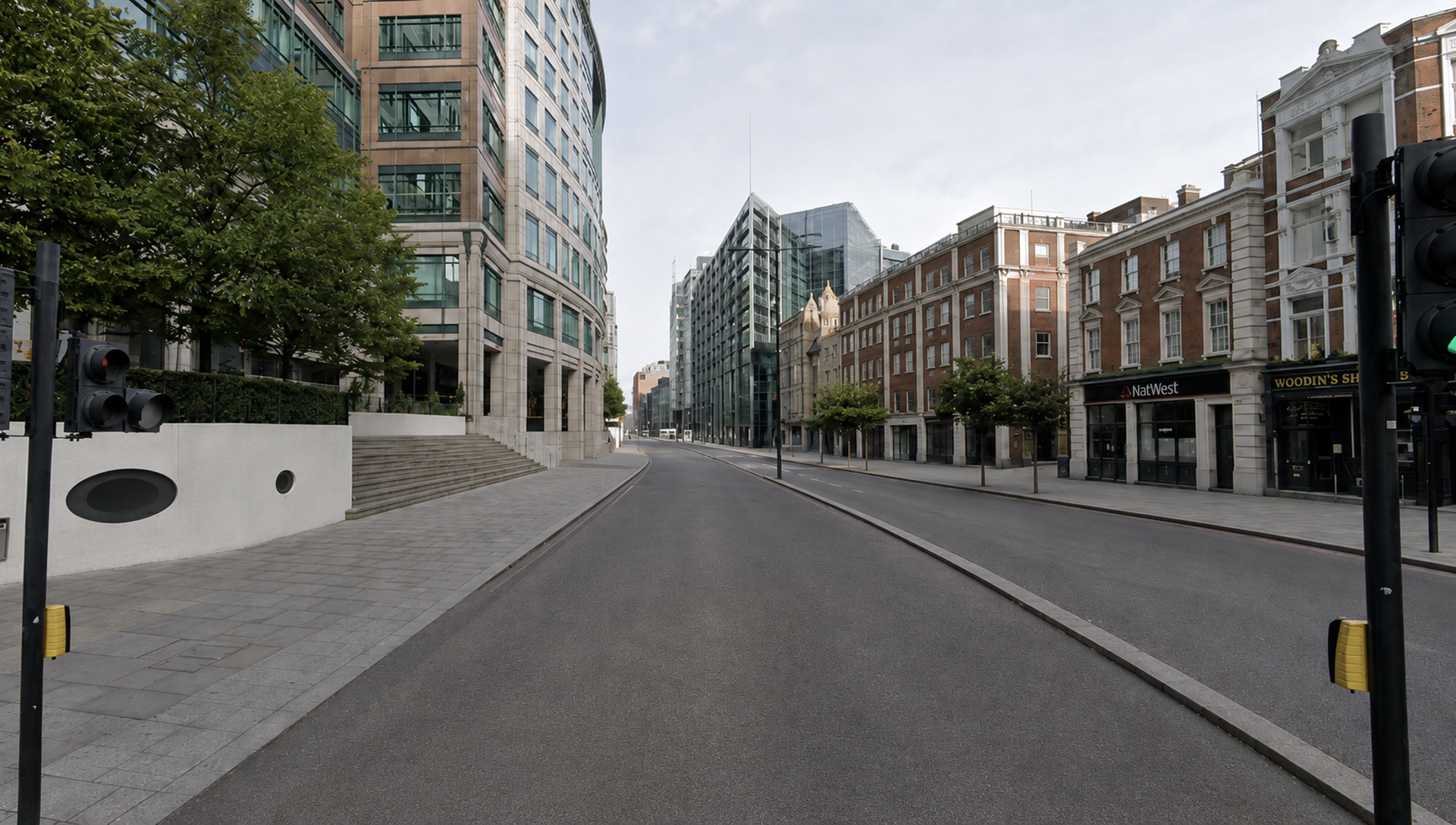
People, vehicles, bikes, signage or distracting artefacts can be removed. Weather, time of day, colour and mood can be art-directed before any motion is generated.
This is where a found view becomes a usable plate.
Motion studies
These Full HD tests demonstrate motion, stability and environmental range. They are not final-delivery quality or a complete eight-angle set.
Approval pipeline
Three routes and the visual direction are agreed before production begins.
Eight angles per location are prepared, cleaned and art-directed.
Review versions keep iteration practical while motion and look are refined.
Only approved plates enter the time-intensive final render and finishing stage.
Planning note Generation is computationally intensive. Sufficient lead time and a clear approval point are essential; the final schedule is set once locations and scope are locked.
Proposed project
Project fee£2,800